About... shim Sime... shim Abel... shim Syd shim Syd shim Roger
shim
Sime's site
shim
Sime Silverman published the first issue of Variety December 16, 1905
shim
Search for:
shim
home
shim
Muggs
shim
Obits
shim
Pics
shim
Archive
shim
Forme
shim
NEW TO SIMESITE?
For a QUICK GUIDE to the site click this link
shim
JACK LOFTUS, WHERE ARE YOU?
shim
Simesite has been contacted by a lady, a former friend of Norma Nannini's, who sent us an e-mail for you. But the only e-mail contact we have for you is at Nielsen, which we know you're no longer with. So please drop Peter Besas (pbesas@hotmail.com) a line and let us know where to reach you.

ART WOODSTONE CHECKING IN TO SIMESITE

Jun 26, 2008

By PETER BESAS

We were pleased to hear from an old mugg, Art Woodstone, who worked on 46th Street as a reporter until 1963 and is now living in Huntington, Connecticut. Since 1963 was before my own stint with Variety, I never had the pleasure of meeting Art, who worked side by side in the TV section with George Rosen from 1953 to 1963. Art writes that between Bill Greeley and himself they must have cost the paper thousands of dollars in advertising revenue due to some of the hard-hitting copy they produced on their typewriters, which sometimes involved advertisers. Yes, that was how the OLD Variety worked, before the corporates made it "advertiser friendly".

Art asks about the whereabouts of Jesse Gross, Len Traube, Hy Hollinger, Fred Hift. We cued him in on that side, mentioning that Hy is still going strong at the Hollywood Reporter in LA. He asked us about "Inside Variety" and I told him where to get a copy, and I wrote him about the big 100th Anni party that Syd sponsored in 2005 at Sardi’s. Mort Bryer was kind enough to send him a copy of the Album.

Art writes:

"I've lived and traveled the last 10 years in obscurity, so I should have grown accustomed to being ignored. But, as all writers have egos, or they wouldn’t be writers, I miss seeing my name in print. Anyway, I await notes or calls from old friends, especially the old skeptics, the ones who produced some of the hottest, toughest stories printed in the first 60 years of the Weekly. Tell them that nostalgia has overtaken me and the older I get the more I seek out old, dear colleagues.

"They can reach me via the Internet at pblawie@att.net or by phone 203-402-0613. I’ll be in and out til late August.”

-30-


MORRIS ROTH

June 24, 2008

Longtime Chicago bureau chief Morry Roth passed away on June 11 in Chicago of lymphoma. He was 82. According to the Variety obit, Roth originated the term "happy talk" to describe the breezy news format made popular by Chicago's Channel 7, and was one of the first reporters to seriously cover cable TV.

Roth started at Variety in 1961, covering the nightclub and entertainment business as well as the fledgling theatre scene in Chicago. He also reported on film exhibition in the area.

Raised in South Bend, Indiana, he served in the Army during WWII and then entered the public relations business, working on behalf of bond drives for the state of Israel. His journalism career started at the former Berwyn Beacon. He also covered commodities for the Wall Street Journal in Chicago before joining Variety.

Roth is survived by his wife, Judy, a son Jason, a daughter, Kaela, and three grandchildren.

  A KUDO FOR MORRY ROTH

By MORTON BRYER.

Morry Roth, an old mugg and former bureau chief of Variety's Chitown office, has gone to his reward. He ran what I considered to be one of the paper's "friendly" offices. I first eyeballed him when he came into the 46th Street headquarters to be interviewed by Abel and Syd, sometime in the 60's.  I was struck by his close resemblance to the President of the Confederacy, Jefferson Davis ( I'm an old student of that period ).  Spitting image, I would say.  Odd, for a man who was quite "liberal".


In my experience, there were three very "friendly" Variety bureaus, where a staffer from any of the other offices could count on a warm welcome.  First and foremost, Hank Werba's Rome bureau, always a fun scene.  Secondly, London, under Roger Watkins, where you could count on a barrage of smiles and, needless to say, a visit to the local pub (after work, of course).  Well, also sometimes during the so-called "hours of toil".  Good for the working morale, you see.  You did a better job after wetting your whistle. 


And I would add the Chitown office, located in the glorious old Wrigley Building in downtown Chicago, which comes in a close third.  Morry would always "take care of" visitors from other offices, Chicago being a most friendly burg, in my experience.


On one occasion, during the famous 1968 NAB convention, he managed to get me an invite to Hugh Hefner's famous mansion for a "pool party", and I don't mean the billiards variety.  A very difficult invite to obtain, but Morry had entree with Hefner, I quickly learned.


A most jolly party it was, with great grub, excellent libations and, of course, the pool, available for the more courageous types (alas, I usually stick to the kiddie's pool myself; any water over three feet makes me nervous).  There were the famous Bunnies prancing about, showing off their well-known allures. But, typical of all of the old muggs, I was more interested in zeroing in on the bar and chow table.  All in all, it was a most pleasant experience and I still thank Morry Roth for having taken me along.


Now, as for the New York office, at least concerning my ad department, well, the attitude towards visitors, I would say, could be described as "cool", even "frigid", maybe typical New York.  But certainly not warm and welcoming like Rome, London and Chicago.


30


STRATTON PEED ON FELLINI

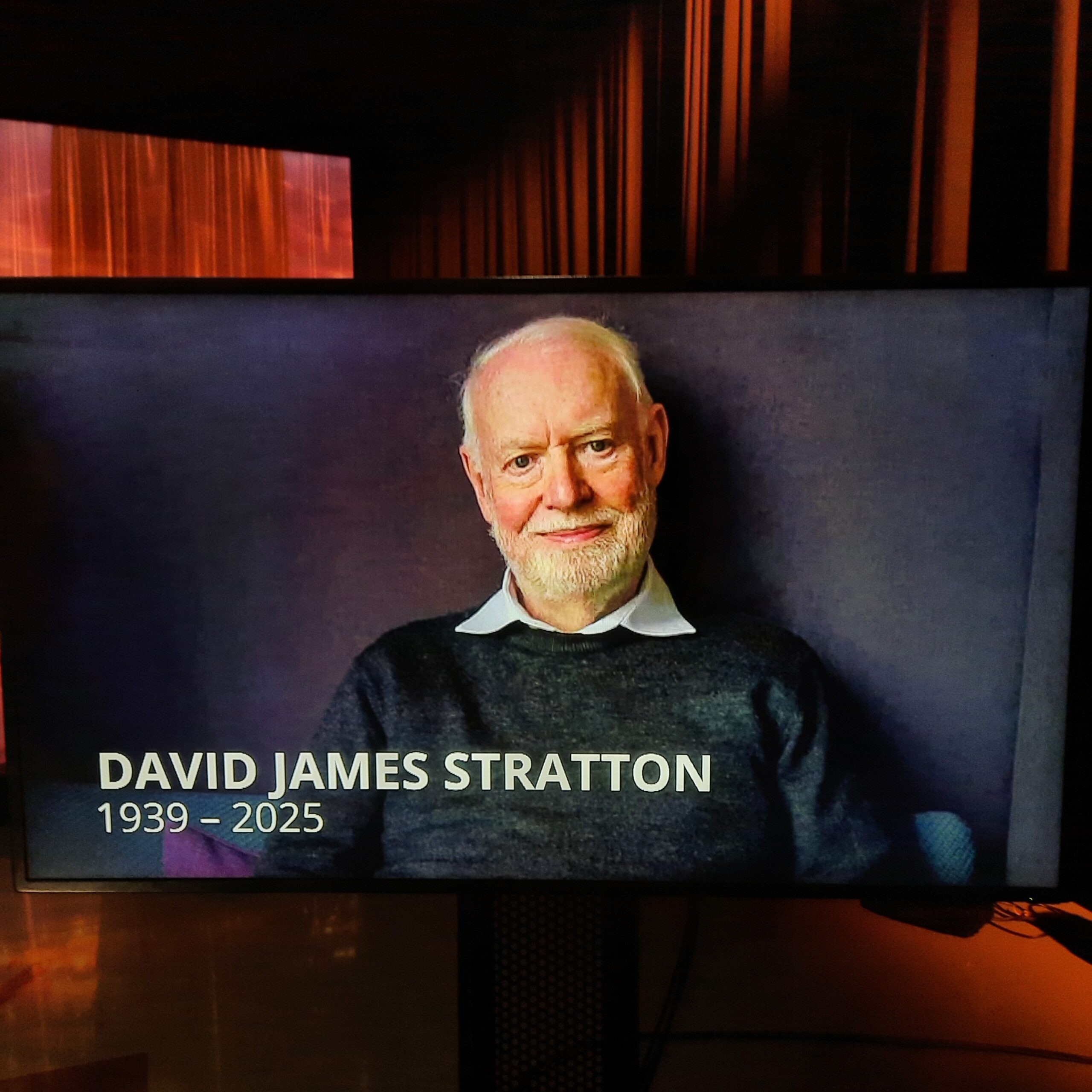
Apr 14, 2008 Longtime Variety mugg David Stratton has just published his recollections of a life in film, titled "I Peed on Fellini" (Random House, Sydney), and has kindly sent us an autographed copy.

David's book is an autobiography, which in his case means that it is chock full of references to people, places and films he came in contact with over a lifetime dedicated to viewing and reviewing films throughout the world. Hundreds of people, from Paris Variety scribe to Federico Fellini, are mentioned (unfortunatley there is no index), and occasionally sections pop up relating to the old Variety and some of its staffers.

So we thought the best thing to do would be to excerpt a few of these.

After a Foreword by Aussie film director Peter Weir, David explains in his Preface that he only had one encounter with Federico Fellini. It was in 1966 when he was 26 years old and had recently directed his first Sydney Film Festival. That year, during his first visit to the Venice Film Festival, he attended a party held in the Palazzo Ducale (Doge's Palace) and after downing a number of glasses of champagne, and dazzled by the legendary thesps and helmers around him, he went to relieve himself at the men's room. As he stood up against the porcelain, feeling a sense of relief, he noticed a big man was standing next to him who looked vaguely familiar. Urinating next to him was none other than Federico Fellini! He turned towards the great man. "Mr Fellini," he began. And he peed all over his shoes.

"One result of this brief, unfortunate, encounter was that I learnt an Italian word: 'Stronzo'. It means 'Asshole.' It was well deserved."

MOSK.

"One of my most important contacts, and the beginning of a close friendship, was Variety's legendary Paris representative Gene Moskowitz... I was very familiar with his work long before I met him. Mosk was a large man, with a round face and sparse, crinkly hair. He ws heavily suntanned, smoked cigars and looked for all the world like a caricature of a Mexican bandit. As soon as he discovered that I was knowledgeable about films and that I shared many of his enthusiasms he took me under his wing and introduced me to his many friends. "My boy" he used to call me affectionately, and we used to hang out together for much of the time.

"Mosk always travelled with a small portable typewriter, on which he composed the reviews he sent to the New York headquarters of Variety. I learnt later on that, although he was prolific, his colleagues back in America often dreaded the arrival of his copy because he wrote in a peculiar, haphazard style which was borderline incomprehensible and always had to be extensively rewritten." (pp 124-125).

OTHER MUGGS

"In addition to my great friendship with Variety's Paris bureau chief, I found, as I travelled the world, that in every major city there was usually a Variety 'mugg', as they were called, who would be of invaluable assistance with advice, contacts and moral support. Bob Hawkins, one of Syd’s most trusted lieutenants, seemed to cover whatever territory was required, and turned up at many of the major film festival. The Rome bureau chief was Hank Werba; in London, there was the exuberant Roger Watkins; from Copenhagen, Keith Keller covered all of Scandinavia; in Madrid, there was Peter Besas, who became the paper's archivist and historian; in Chicago, there was Frank Segers, a specialist in Asian cinema; and so on.

"The editorial office in New York was located at 154 West 46th Street. The editor sat on the first floor at the front of the building, where a large window enabled him to look down on the passing parade in the street below; the printing presses were out in the back. You expected to see James Cagney or Joan Blondell pass by at any moment. In addition to the box-office reports, the news, the gossip and the obits, Variety published reviews of just about every film which screened publicly in most countries of the world. The reviewers signed their pieces with traditional four-letter nicknames - Mosk, Werb, Besa, Kell, Hawk.

"In the late 1960s there had been a Variety stringer in Melbourne called Raymond Stanley who contributed the occasional review, but I had noticed that these contributions had recently ceased. Not that there were many Australian films to review in those days, and Variety didn't cover short films. But in February 1971 I saw Three to Go, a three-part film produced by Gil Brealey for the Commonwealth Film Unit which featured the work of three young, up-and-coming directors: Oliver Howes, Brian Hannant and Peter Weir. The film was impressive and I thought it was a shame that it would probably not be covered in Variety, so I decided to submit a review myself.

"I copied the paper's house style as closely as I could and wrote a very positive review. I signed it Strat and mailed it to the editor in New York. It hadn't occurred to me that Strat consists of five letters, not four, and it obviously didn't occur to the editor either because my review duly appeared in the paper on 7 April 1971. There had been no correspondence from New York about this but I waited eagerly to see how much my fee would be. No money arrived and nobody contacted me. I learnt later that stringers were expected to invoice the paper for their work. Disappointed at the complete silence from the other end, I decided not to write any more unsolicited reviews. To this day I've never been paid for the review of Three to Go." (pp. 192-194)

MIKE HARRIS

"One morning in 1975 I received an unexpected call from the Variety office in London. Harold Myers (Myro), a British-based troubleshooter for the paper, was on the phone. Since it was obvious that big things were happening in film production in Australia, he said, Syd Silverman, the paper's publisher, had decided to establish a Variety bureau in Sydney; was I interested in running it? I was amazed by this proposition, because, apart from my occasional contributions to The Bulletin, The Age and Men in Vogue, I had no experience - and certainly no training - in journalism. I wondered if someone at Variety had been impressed with my unsolicited review of Three to Go, or perhaps I'd been recommended by some of my friends who worked for the paper? Although I was very flattered to be offered the job I didn't think I was suited for it; but I knew who'd be perfect in the position.

"Mike Harris was, at the time, reviewing films for The Australian, having taken over from Michael Thornhill when the latter left to direct films. Mike was American-born, British-raised and was married to an Australian, Carolyn. He was a born journalist, erudite, amusing, witty - a lover of food and drink and good company... When Harold Myers arrived in Sydney to discuss the Variety position with me I told him that I thought Mike would be a far better candidate for the job and I drove him and his wife, Maxie, to meet the Harrises. As I expected, they hit it off immediately and before long Mike was establishing Variety's first Australian bureau in a small office in Albion Place, just behind the George Street cinemas. Mike arrived on the scene in time to cover the Australian film revival for Variety, which he did with wit and perception.” (pp. 2432-244).

ROGER

In November 1982, after stepping down as the Director of the Sydney Film Festival, David met Roger Watkins in London:

"The first person I told about my decision (of stepping down) was Roger Watkins, the London Bureau Chief of Variety. Roger was one of those immensely likable people who always seemed to be cheerful and easygoing but who was obviously a formidable entertainment journalist. I admired him a great deal and tried to catch up with him whenever I was in London. We were having lunch together when I told him about the changes I was planning. To my surprise, he immediately suggested that I review films for Variety on a regular basis. This was just a few weeks before Mosk's tragic death, but it was already obvious that a replacement would be needed for the man who, for a quarter of a century, had been the paper's main reviewer in Europe. I'd always written program notes for the SFF catalogue and had contrinued the odd review and article here and there; I'd also been writing on Australian cinema for Peter Cowie's International Film Guide since 1973, but I still didn't see myself as a reviewer. Roger had the confidence in me I didn't have in myself and I'll always be grateful to him for that." (pp. 270-271).

ROGER'S PITCH TO STRAT "Early in 1986 Roger Watkins approached me about a special assignment within Variety. He was now the paper's Editor-in-Chief and had relocated from London to New York. He wanted to rationalize the way films were reviewed at the festivals that the paper covered in Europe. Todd McCarthy, whom I'd known for 16 years, was now the senior reviewer for the paper in North America and was effectively coordinating the review coverage there. Roger wanted me to come to Europe, to be based either in Paris or London, and to take over the film review coverage of the paper for the rest of the world outside America. It was an exciting prospect. Roger was very keen but the final decision had to be made by the owner of the paper, Syd Silverman. I met with Syd in Cannes in 1986 and we had a very positive discussion about the proposal. He agreed in principle, but the stumbling block was the cost of my relocation from Australia to Europe. I told him I'd work out a figure and phone it through to him after my return to Sydney. When I phoned him I could tell he'd gone cold on the idea, and I think now it was probably because he was in the process of negotiating the sale of the paper. In any event, the idea came to nothing and after the paper had been sold Derek Elley assumed approximately the role that Roger had been talking about with me...

"When Syd finally sold the paper, he sent me a note thanking me for my contributions and enclosing a check for $500. Since I had only been writing for the paper on a regular basis for three or four years I thought this was remarkably generous. Syd was a gentleman of the old school and this gesture was typical of him." (pp. 279-280)

-30-


Click here to read Paul Rosovsky's recollections of Abie Torres

Click here for Fred Lombardi's recollections

ABIE TORRES

by PETER BESAS

Mar 24, 2008

Simesite learned with great regret of the passing last Tuesday (Mar.18) of Abie Torres near his home in St. Petersburg, Florida, following a long bout with cancer. He was 67.

Born in New York City of Puerto Rican parents, Abie (Abraham) joined Variety as a messenger in 1958 and eventually took over the "production" department, which was in charge of laying out the paper each week for its publication (in those days) on Wednesdays. Abie's desk was located at the rear of the ad department, in the back of the long, narrow "ground floor" of the building at 154 West 46th Street. (In fact, you reached the floor by walking down a short flight of stairs right after passing through the main entrance to the building).

It was Abie who checked and controlled every ad that came into the New York office, working in tandem with the late Jimmy Antinori, the art manager, who made any changes required on the ad copy coming in, before passing it on to Abie. Mondays were usually the busiest days in the lay-out department, with last-minute ads coming in, and Abie laying out the paper in the afternoons together with publisher Syd Silverman. In those pre-computer days, this was done on long sheets of paper, where each section of the paper was marked off, broken down into a list of individual pages, which were marked either with the name of the full-page advertiser, or "broken" pages, which contained ads in addition to editorial copy, and finally the pages which featured only editorial copy.

Laying out the issue, even on an average week, was a tricky business, and usually took several hours to do. The system of "jumping" some articles to the end of the paper, where they were continued, certainly helped (a system not used in many other countries). But this was relative child's play, compared to having to lay out "special" issues or sections, of which there were an increasing number starting in the 1970s. These reached their apogee during the yearly Cannes Film Festival issue in May, when Abie and Syd would, at the height of Variety's international boom, have to lay out three huge issues, back to back, totalling well over 1,000 pages! All this by hand, without computers, with hundreds of pages of advertising coming into the small downstairs area of the building on 46th Street from all over the world, from such places as Los Angeles, Chicago, London, Rome, Paris, Sydney and Madrid, in each of which cities Variety maintained full-time offices.

I guess both Abie and Syd might break the marathon every now and then for a snort at the local bar, while the frenzy of arriving packages, messengers coming and going to the production facility in Valley Steam, Long Island, phones ringing off the hook, as the two operators on the fifth floor plugged in the different extensions in the building on their console, and everyone, from Variety's old-time secretary Norma Nannini to the ad department, kept the staff jumping at fever pitch in order to get the issues out.

On a regular weekly edition, after Abie and Syd had laid out the issue on Mondays, they would follow up on Tuesday by heading out to Balan Graphics in Valley Stream, LI, where the paper was laid out on large boards by Syd and the section editors, proofread and the ads rechecked by Abie before being sent to the printing plant, located in the Bronx and later in Brooklyn, and which Abie and Syd also usually went to after 6 p.m. on Tuesdays to see the first copies coming off the press.

Wednesday the paper was out on the newsstands and in the mail for subscribers. It was also the day when almost everyone in the office had off, both editorial and sales departments. Then, on Thursday, the routine was repeated all over again.

On the occasions I passed through New York, I'd sometimes spend a couple of weeks in the office putting together my yearly Hispanic and Latin American issue. On such occasions I'd sometimes swap a few words with Abie in Spanish (I was commonly known as "Don Pedro" to the staff), but usually we'd talk in English. I never saw Abie being anything but calm and collected, even when "screw ups" arose, or copy didn't come in on time, or his layout had to be painstakingly revised.

In the spirit of the old Variety, and in the tradition of the mavericks who founded Variety in 1905, Sime Silverman being the leader, Abie always maintained a street-smart and somewhat irreverent attitude towards the powerful of this world, a skeptical stance mixed with an element of distrust of authority, which of course immediately was at loggerheads with the Cahners corporate management when they took over operations in 1987. Abie was never a "yes" man, and had no compunctions about voicing his views about anything, usually in a slangy style of his own. But though he lived in an imperfect world, when it came to his job at the paper he was a meticulous perfectionist, and virtually no errors, no matter how trivial, passed him by. Syd knew he could depend upon Abie. And he did.

Abie ankled the sheet around 1993, after putting up with the corporates on the new Park Avenue South office for several years.

The last time I saw Abie was for his wedding to Joya in St. Petersburg about 15 years ago. All his friends in Variety were delighted that he was planning to settle down with his new wife, an ex-teacher, in Florida. He had certainly sowed his wild oats while in New York, but now seemed to enjoy his life down south. He then managed to get a job on the St. Petersburg Times until his illness forced him to give it up.

Unfortunately, in 2005 he was already not well enough to join us in the 100th Anniversary celebration held in Sardi's that year.

But to the very end Abie remained very much a part of the old Variety survivors, and kept in touch with some of the other ex-muggs. And we were pleased to see that he even took the trouble to send us his choices for the Oscar sweepstakes this year, which we ran just a month ago.

Abie is survived by his wife, Joya, as well as by his first wife Jean and their daughter, Susan. Funeral services were held for him on March 21.

CONDOLENCES TO JOYA AND SUSAN

Please convey my condolences to Joya and Susan.

Being very young when I started at Variety, I had a lot to learn about publishing. Abie was always willing to give instruction or advice, and I learned more from him about production, then anyone else since. I am truly sad that he is gone, because there will never be anyone as willing to help or guide as Abie was.

Arlene Kadushin-Rosenstein

REMEMBERING ABIE

(Or, can you get that damned quarter-page ad in the paper past deadline?)

By FRANK SEGERS

Call me crazy if you wish - and many do, regularly - but it occurs that Variety publisher Syd Silverman never felt as comfortable or more at ease working with anyone at the old 46th St. office in Manhattan as he did with Abie Torres.

Early each week, when editorial copy and ads for the upcoming Weekly were being mapped out, Syd and Abie, the key production person, used to sit in the rear of the street-level, bottom floor at 46th St., which accommodated the advertising and production departments.

They sat on opposite sides of a long table, as I recall, poring over the paper's makeup page by page.

I won't invoke the cliché of two opposites working harmoniously together - the Princeton-educated grandson of Variety founder Sime Silverman and the rough-hewn, up-from-Brooklyn Puerto Rican kid. But there it was, and it was true.

Striking was how efficiently and easily Syd and Abie communicated with each other. Conversation was minimal. Often, a grunt or two seemed to accomplish what for others would require a half day's worth of corporate meetings. Abie seemed to intuit what Syd wanted and, perhaps, vice versa.

What also was striking was the obvious respect - and, I suspect, affection - the two shared. The feeling was not expressly articulated, of course (such things were not done on 46th Street), but shared nonetheless. When they sat at their table, Abie and Syd were more or less equals in their element.

The fact is that, rare for a publisher, Syd always placed premium value on the Weekly's production aspect. He knew production intimately, and, certainly, so did Abie. (This knowledge was openly belittled by Variety's new management, post 1988, much to the paper's detriment, in my view.)

I personally did not know Abie terribly well. He was an amiable if outwardly gruff presence, who did not suffer management fools easily or gladly. As I grew to know him a bit over time, I much admired his lusty joie de vivre garnished by a wicked sense of humor.

For anyone with exposure to selling advertising, it was impossible NOT to respect and rely on Abie's enormous knowledge and prowess at putting the Weekly to bed. He was the necessary go-to guy to get that last minute quarter-page blurb into the paper 20 minutes beyond deadline. That was as true for the 70-page issues of the early 1970's as for the 600-page behemoths published yearly for the Cannes Film Festival.

Abie was a lifesaver regarding the always-tricky layouts of the special editorial-advertising sections, an important economic contributor to pre-1988 Variety issues. He understood and respected the enormous work put into these efforts, and was sensitive to suggestions of editorial contributors - who often lacked Abie's sense of grace under pressure.

No matter the professional pressures of the moment, it seemed that Abie - much like Syd - was outwardly unflappable. He took care of production matters unceremoniously with dispatch and supreme confidence in his abilities, considerable but sometimes underrated by others.

My sympathies to Abie's widow, Joya - who, as it turns out, is the niece of the late Jimmy Antinori, one of Abie's closest working companions in the pre-1988 Variety production department.

A toast to Abie Torres' memory is certainly in order. I thank him, I salute him and I will think of him often.

THE ALWAYS RELIABLE ABIE

By MORT BRYER
(former Advertising Manager of Variety)

I don't recall Abie Torres every making an error, even while putting together some of those obese, nay, fat, 500 and 600 page issues.

When I arrived at the towering edifice on west 46th street, at about 9 a.m., he was already at work. When I left, sometimes at about 9 p.m., he was still fighting his way through a gaggle of ads and paperwork, from assorted bureaus, worldwide. Back at 9 a.m. the next morning, Abie was there. I had the odd feeling that he had been working all night.

Abie was a product of Syd's "merit system". He could do the job. Who needed sheepskins and a master's degree? But more important, in a sense, Abie was a loyal and faithful friend. He loved his job, as he reminded me at times, when we were away from the office, socializing, sometimes at a showbiz shindig, based on an invite inherited from a reporter who couldn't attend because he had to go off to a press conference, or was off that day. Both Murray Rann and Jim Antinori, (the ad manager and art maven at that time) took Abie under their respective wings and since he quickly showed talent, he advanced out of the ranks of our "messengers" and eventually became the production chief of weekly Variety, which in a sense was the point of the spear (versus the Daily in Hollywood) re the income of the paper, which is to say, the ad revenue.

And Abie did not suffer fools, whoever they happened to be. About five years ago, on a trip to the Florida west coast, I had a get-together with him. We had a few pops and lunch and talked about the good old days. He was working for one of the local fishwrappers, though I can't recall his exact job, but like all of the old muggs, he missed working for THE paper and even missed West 46th Street. He was a religious kid, so if there is a St. Pete's gate, he is there now!

-30-


A TOAST TO TORRESOWITZ

by PAUL ROSOVSKY

Apr, 17 2008

As a Variety newbie decades ago, I was lucky enough to come under Abie Torres' generous wing (after he had come under Syd's, Murray Rann's and Jimmy Antinori's) and learned more from him than I had learned in school. We toiled away on those gargantuan issues and got into our share of trouble in the off hours (the tale of the places the production manager of Screw got us into is another story).

  Abie used to call himself a Puerto Rican Jew and he always called me Pablo and I always called him Abraham in front of non-muggs. So the advertisers and others who spoke to either of us on the phone would invariably walk over to the wrong one when they came into the office (assuming I was Abraham and Abie was Pablo). And we usually played along with the joke.

Abie's sometimes gruff demeanor was just a pose, as he was a pussycat. That was just the way he got people he didn't want to talk to, to leave him alone, especially in the midst of keeping all the production information in his head on deadline. He did teach me three important lessons (in addition to how to lay out a 464-page issue in one night):

How to drink;

How to manage people, and most importantly,

How to tell people to go screw themselves (expletive deleted) with a smile on your face.

  Mort's remembrance to the contrary, there were a few errors that did manage to creep into print on our watch (and which Abie would appreciate our chuckling over):

The obit that playwright James Kirkwood successfully placed for the (still-living) New York Times book reviewer who had panned his recent novel;

The misplaced legit ad in appreciation to two (again, still-living) Broadway producers that ran with a thick black border in the obit section. This prompted Ruth Gordon to call early one Wednesday morning, irate that we had announced her two friends' premature demise.

The small graphic of a running man that was intended to appear superimposed on one of the picture ads in a Cannes issue but which got separated from the intended artwork and ended up appearing in multiple ads because we couldn’t remember which one was the right one. I think I occasionally notice the running man art in ads in the Daily. Pasteup artists Idie and June and I suspected either Abie was very drunk or the ad was haunted.

  Next time I am on West 46th Street I will look for Abie in the parking lot where our desks used to be and toast him with some sake in front of where Kyoto used to stand.

P.S.  See the sketch Idie Levine did of him, Jimmy A and myself here.

-30-


ABIE'S HELPING HAND

by FRED LOMBARDI

When I first met Abie Torres what struck me was what seemed his mocking tone towards just about everything and everybody. He didn't seem like someone to whom you'd want to confide.

Yet when I was very green and had to manage various miscellaneous services, most notably our messenger staff,  Abie was the one person who patiently sat down with me and gave me very sound advice.

Abie gave the impression of complete insouciance, not rebelliousness but imperviousness to all the slings and arrows of authority that left him unruffled. But both from the quality of his work and from conversations with him, I realized that no one could have had more personal loyalty than he did to Jimmy, Mort and Syd.

Under his different masks, I know that Abie had his share of emotional scars. I hope that his last years in Florida were happy and tranquil but know that he always enjoyed the hurly-burly of Variety, 46th Street style.

-30-


THIS YEAR'S SIMESITE OSCAR SWEEPSTAKES WINNERS

Feb 25, 2008

Well, it's the morning after, and I suspect none of us in Europe stayed up through the night to watch the ceremonies. But we now, the morning after, we have the results on the guessing.

And OUR winner is...

PAUL HARRIS

(former bureau chief of Variety in Washington)

For the record, Paul guessed 10 out of the 12 categories.

The runners-up were:

IAN WATKINS - 8 correct guesses
ADAMS and BESAS - with 7 correct guesses
HOLLINGER and MICHIE - with 6.
TORRES and MIKE SILVERMAN - with 5
HOINEFF, SEGERS and MARICH - with 4
KINDRED with 3
and MORT BRYER with a big "0".

(Sorry Mort, but keep on sluggin'!)

THIS YEAR'S SIMESITE OSCAR SWEEPSTAKES

by PETER BESAS

Feb. 18, 2008

Okay, it's a bit late to be sounding out all the muggs, with only ELEVEN days to go before the Academy Award ceremonies on February 24. But here we go again, trying to maintain a Simesite tradition. Also, I KNOW most of you haven't seen the majority of the films, but that could even prove an advantage in more ways than one.

So... hurry, hurry, and send me your nods for the TWELVE categories selected. Send your breathtaking selections directly to me in Madrid at: pbesas@hotmail.com. and our computer maverick in London, Ian Watkins, will upload them posthaste on the Simesite.

Following are your choices:

BEST FILM
Atonement
Hollinger, Besas
Juno
Bryer, Marich, Torres
Michael Clayton
No Country for Old Men
Adams, Watkins, Michie, Harris
There Will Be Blood
Kindred, Silverman(Mike), Hoineff, Segers

BEST LEADING ACTOR
George Clooney in "Michael Clayton"
Marich, Torres
Daniel Day-Lewis in "There Will Be Blood"
Kindred, Silverman(Mike), Hoineff, Adams, Segers, Hollinger, Watkins, Michie, Besas, Harris
Johnny Depp in "Sweeney Todd"
Tommy Lee Jones in "In the Valley of Elah"
Viggo Mortensen in "Eastern Promises"
Bryer

BEST SUPPORTING ACTOR
Casey Affleck in "The Assassination of Jesse James"
Javier Bardem in "No Country for Old Men"
Hoineff, Adams, Segers, Marich, Hollinger, Watkins, Michie, Besas, Harris
Philip Seymour-Hoffman for "Charlie Wilson's War"
Kindred, Torres
Hal Holbrook in "Into the Wild"
Bryer
Tom Wilkinson in "Michael Clayton"
Silverman(Mike)

BEST LEADING ACTRESS
Cate Blanchett in "Elizabeth"
Kindred, Hoineff, Marich, Besas
Julie Christie in "Away From Her"
Hollinger, Watkins, Michie
Marion Cotillard in "La Vie en Rose"
Torres, Harris
Laura Linney in "The Savages"
Ellen Page in "Juno"
Silverman(Mike), Adams, Bryer, Segers

BEST SUPPORTING ACTRESS
Cate Blanchett in "I'm Not There"
Adams, Marich, Watkins, Michie
Ruby Dee in "American Gangster"
Silverman(Mike), Bryer, Segers, Besas
Saorise Ronan in "Atonement"
Kindred, Hoineff
Amy Ryan in "Gone Baby Gone"
Tilda Swinton in "Michael Clayton"
Hollinger, Torres, Harris

ART DIRECTION
American Gangster
Bryer, Torres
Atonement
Kindred, Hoineff, Segers
The Golden Compass
Hollinger
Sweeney Todd
Silverman(Mike), Adams, Marich, Watkins, Besas, Harris
There Will Be Blood
Michie

CINEMATOGRAPHY
The Assassination of Jesse James
Atonement
The Diving Bell and the Butterfly
Segers, Hollinger, Michie, Harris
No Country for Old Men
Kindred, Adams, Bryer, Torres
There Will Be Blood
Silverman(Mike), Hoineff, Marich, Watkins, Besas

DIRECTING
Julian Schnabel (The Diving Bell and the Butterfly)
Jason Reitman (Juno)
Bryer, Marich, Torres
Tony Gilroy (Michael Clayton)
The Coen Bros. (No Country for Old Men)
Silverman(Mike), Adams, Segers, Hollinger, Watkins, Michie, Besas, Harris
Paul Thomas Anderson (There Will Be Blood)
Kindred, Hoineff

DOCUMENTARY FEATURE
No End in Sight
Hollinger
Operation Homecoming
Hoineff, Adams, Segers, Watkins, Besas
Sicko
Kindred, Silverman(Mike), Bryer, Michie, Torres, Harris
Taxi to the Dark Side
War/Dance
Marich

FILM IN FOREIGN LANGUAGE
Beaufort (Israel)
Silverman(Mike), Hoineff, Besas
The Counterfeiters (Austria)
Kindred, Hollinger, Watkins, Torres, Harris
Katyn (Poland)
Adams, Segers, Marich
Mongol (Kazakhstan)
12 (Russia)
Bryer, Michie

BEST ORIGINAL SCREENPLAY
Juno
Kindred, Silverman(Mike), Adams, Segers, Marich, Hollinger, Watkins, Michie, Besas, Torres, Harris
Lars and the Real Girl
Michael Clayton
Hoineff
Ratatouille
The Savages
Bryer

BEST ADAPTED SCREENPLAY
Atonement
Bryer, Marich, Watkins
Away From Her
The Diving Bell and the Butterfly
Segers, Hollinger
No Country for Old Men
Hoineff, Adams, Michie, Besas, Torres, Harris
There Will Be Blood
Kindred, Silverman(Mike)

REPLY TO RON HOLLOWAY'S SIG STEAL

By MICHAEL SILVERMAN

Feb. 18, 2008

Regarding Ron Holloway's story about being perturbed that he had apparently absconded (by accident) with Hy Hollinger's review signature Holl. years after Hy had left the paper for Paramount publicity (only to return later):

I am also guilty of same offense as charged. While working at the Daily in L.A. around 1981, I was assigned a review by editor Tom Pryor. I don't recall if it was a concert or tv pilot review, but he did inform me I'd need a review "sig."

As it was likely after hours in the N.Y. office of weekly Variety, I did not do the usual check with Syd Silverman's secretary, Norma, who was the keeper of the official review sigs list (which I found out later). My evil twin brother Mark Silverman had already taken the obvious Silv. signature. I wasn't terribly bummed, as I was about to enter the Variety secret society of reviewers with double identities, and I thought it was obvious that Silv was a member of the founding family.

With an eye to keeping my identity under the radar of crafty and unscrupulous studio exex, I proposed Mich., which didn't ring a bell with Tom Pryor, so he figured it was OK.

Well, once the review appeared in the paper and Norma noticed it, she called and really let me have it! She scolded me up one side and down the other, saying review sigs were a singular i.d. of the "muggs," and that duplication was verboten. Turns out that a Paris bureau staffer, Paul Michaud, who wasn't there very long, had briefly used the review sig of Mich. After chewing my ear out, Norma relented and allowed me to continue using Mich., probably because it was more trouble to monitor this list and keep up with the changes/dupes etc. Or, it could be more likely that my last name was Silverman and she didn't need any more headaches. I think I gave her a migraine.

Of course, I blame all of this on former TV editor Larry Michie (Mick.) who could have saved us all the trouble and just used Mich. for his reviews. Then I'd probably be known simply as Mike. or something simple.

In any event, I always thought the review sigs were a terrific method of building esprit de corps among the "ink-stained wretches" (Morrie Gelman's words, not mine), who inhabited the Weekly and Daily newsrooms. It always made me feel part of a special "club," and was accustomed to addressing colleagues by their sigs, rather than their names.

I never called b.o. analyst Art Murphy anything other than "Murf.", and took great pleasure in greeting Hy Hollinger every morning with a "Hy,Ho!" which saved time as it was both a greeting and his sig name. It's still one of the best sigs ever, and with apologies to Ron Holloway, he's entitled to keep Holl. in perpetuity.

Of course, one of the pettiest things Peter Bart ever did (I know, long list), was to forbid use of review sigs when he was given control of Variety editorial. He called it something like an "outdated anachronism." If there's an upside, it means no one else will ever steal your signature. And the late Norma Nannini is still in control of the list, I'll bet ....

-30-


LOFTUS RETIRES FROM NIELSEN

Feb. 13, 2008

Former Variety TV editor Jack Loftus will be retiring at the end of February from his job as Chief Communications officer for the Nielsen Company in New York. Jack has been with the firm for 17 years, having joined in 1990 as VP Communications.

Now that Jack will have more free time, we trust he'll start contributing copy to the Simesite, the ultimate refuge of ex-muggs.

DEBORAH YOUNGS JOINS THE REPORTER

Another of the oldtime Variety staffers has joined the ranks of the Hollywood Reporter, which seems to be beefing up its international staff. The latest defection is Deborah Young, long-time Rome-based scribe, who'll be attending the forthcoming Berlin film festival and reviewing pics there as the "chief international film critic" of the trade sheet.

Young has about 25 years of experience as a film reviewer and a reporter, having specialized not only in Italo cinema but also in the Eastern European and Middle Eastern film industries. She was Rome bureau chief for Variety in the 1990s. Deborah has also contributed copy to specialized mags such as Film Comment and Cineaste.

Young was named director of the Taormina Film Festival in early 2007, becoming one of a handful of Americans to hold such a fest title abroad. The second edition of that fest under Young's stewardship takes place in June. She is also the chief programmer for New Italian Cinema Events and has selected films for the Venice Film Festival.

As a writer, she has worked with many of the great Italian directors including Ermanno Olmi and the Taviani brothers. Her short feature "The Tour," which she wrote and directed, premiered at the 2002 Venice Film Festival.

In addition to Deborah, other ex-Variety staffers now form part of the HR team, including Liz Guider, Eric Mika and Hy Hollinger. Also expecting to make the upcoming Berlin scene is ex-Variety Munich-based bureau chief Jack Kinded.

He writes to us saying: "I'm off for Berlin tomorrow (Feb.9) for the fest to visit friends there and perhaps run into old friends or festival enemies. Don't think l'll do any work. although I'm accredited for dpa.

I've been going there every year since 1971 with the exception of 2004, so it's hard to break the habit. The festival has improved greatly since Dieter Kosslick took over from de Hadeln, who always gave me a hard time."

A TALE OF TWO BOOKS
(Remembering Bob Landry)


by MORRIE GELMAN

The new year, 2008, marks a 60th anniversary for a couple of books I own. Both are closely associated with Variety.

One is Variety's "Radio Directory" 1937-1938. It was acquired as a slightly used book from a store on New York's Cortland Street. The other was bought new from a fancy book store in Rockefeller Center. The title of the book, "This Fascinating Radio Business," was in keeping with my sentiments at the time. It was written by Variety's own Robert J. Landry, then Director of the Division of Progressive Writing of the Columbia Broadcasting System.

The books were acquired because I was working in the mailroom of the Mutual Broadcasting System. Filled with youthful ambition and enthusiasm, I needed to know everything there was to learn about radio broadcasting. I saw it as a tremendously colorful yet endangered species and wanted to hang on to every detail before the colors faded.

The "Radio Directory" was compiled and published by Variety as the first of what was projected as annual volumes. It contains more than 1100 pages of hard information. The book's dedication is explained succinctly in its foreword: To cover the "incessant" changes as reported in Variety each week; and to compile "a record of these events as they become a part of the past."

Do you want to know what happened in radio from its infancy to adolescence? The "Directory" tells all. The amount of information is staggering. The subjects covered include advertisers, advertising agencies, educational radio, engineering law, music, networks, news and publicity production and production aids, program titles, radio and newspapers, station representatives, stations in the U.S. and Canada, talent, technical and research, and unions.

Within these broad categories are detailed breakouts. Especially impressive is a compilation of the best known songs and orchestral pieces in the light opera, musical comedies and motion pictures of the previous several decades. And where else could I find the professional records of Richard Kollmar, network actor, free lance announcer and singer (Fred Allen program for Ipana toothpaste), as well as network comedian Parkyakarkus (Harry Einstein)?

Variety sold for 15 cents a copy at that time or $6 annually. The paper had three other offices beyond New York's 154 W. 46th Street. The Chicago office was at 54 W. Randolph, Hollywood was at 1708 N. Vine Street, and London at 12 St. Martin's Place, Trafalgar Square. Sid Silverman was president of Variety, Inc., and Edgar A. Grunwald was "Radio Directory" editor.

The bright red lettered (against a black and blue background) book jacket of "This Fascinating Radio Business" identified Landry as an editor of Variety. While there, it explained, he established its radio program reviews department.

I read this more than 300-page book cover-to-cover. I never formally met Landry but glimpsed him from afar when visiting the New York office after I joined the paper in Hollywood. Years later, with the book's cover in tatters from frequent use, I contacted Landry by mail. I told of my admiration for his work. I said his book remained in a prominent place in my personal library. Landry, in response, called. He offered to autograph my copy of the book if I sent it to him. It took several weeks, while the book traveled back and forth across the country.

When the book returned, packaged carefully to prevent damage in the mail, I opened it with the anticipation of receiving a great gift. I wasn't disappointed. Landry's inscription was, I guess, indicative of the man's graciousness and lack of pretension. He wrote: "To Morrie Gelman

"40 years after publication of a book, an author must appreciate any, but especially an appreciative reader. Thanks."

The inscription was signed Bob Landry and dated 10/24/86.

Now more than 20 years after receiving my autographed copy, 60 years plus after the book's publication, it's still front-and-center in my bookcase.

-30-


REMEMBERING IZZY
(Or Grove vs. Ara, Havana, 1930)


by MORT BRYER & FRANK SEGERS

Izzy Grove

The 46th Street office in Manhattan was for years the magnet to a broad assortment of eccentrics, out of work performers, press agents and other dubious urban species. Among the most memorable of these was Izzy Grove, who operated a poster-placement business in New York, and occasionally booked small ads in the Weekly on its behalf.

One of his opening lines of introduction went, "I'm not Coconut Grove, just Izzy Grove." It was an introduction that he used ad nauseum, year after year. (The Coconut Grove nitery in Hollywood's Ambassador Hotel was THE hot spot for film personalities in the late 1920’s and early 1930's.)

Izzy was a former professional boxer, and had the cauliflower ears and smashed-in snoot to prove it. He was a medium-sized man - he fought usually as a middleweight - with the attitude of a heavyweight. An office visit usually began on the street-level floor, which housed the advertising sales and production departments. It was here that on Wednesday mornings, publication day, show biz people would drop by, walk down a few steps, and find a few copies of the paper that were put out for anyone to look at who wished to do so. Bryer, whose desk was on that level of the building, recalls that many old vaudevillians, who had been on the stage since Sime's day, and who still lived in mid-town Manhattan, would amble in to glance at that week's pages. And since Wednesday was usually a slow day, often enough who chat with the sales and production staff. It was a practice that had begun sometime in the distant past and was not discouraged by publisher Syd Silverman.

However, Izzy Grove tended to come in not just once a week, but two or three times a week. Sometimes he'd turn up to monitor the progress of one of his miniscule ads, and eventually came to be regarded as a nuisance by Jim Antinori, the production manager charged with laying out the blurbs. On one occasion, a consultation with Antinori turned into a disagreeable confrontation. Izzy, then a still formidable 60-something, came on hard, and was quickly dismissed.

Assuming Antinori would back down if things got physical, Izzy turned threatening. A big mistake. The usually implacable Antinori was known to harbor a rarely-displayed hot temper (he was of Italian ancestry) and was himself a man of size. Jim got up from behind his desk and with dukes up, went after Izzy. The two were quickly separated by co-author Bryer and ad manager Murray Rann (himself no shrinking violet, especially in the vocal department).

On another ad-checking mission, Izzy showed up - at almost midnight, no less - at the Variety printing plant in Brooklyn. This was where the Weekly was put to bed, and where the pressure to get things right was highest. Izzy was accompanied by his then girlfriend, whom one staffer described as a "sort of female Frankenstein's monster."

Publisher Syd Silverman, usually the soul of the unflappability, took one look at Izzy and ordered him from the building. Someone remembers Syd saying: "Izzy, you get the hell out of here, right now." Izzy complied.

Not all of Izzy's 46th Street visits were unpleasant. He had an entertainingly brash side that sometimes manifested in Hyde-Park-style speechifying on the second floor, which housed the editorial staff.

Reporters typing away on trusty Royal manuals were occasionally interrupted by a raspy-voiced, heavily New Yawk-accented Izzy standing on the elevated platform -- where Syd and editor Abel Green sat -- in full oratorical flight about some inconsequential subject.

Co-author Segers fondly remembers one such speech delivered impromptu in the 1970's, and the loud jeers and catcalls it prompted from reporters on the floor. It certainly provided an effective late afternoon picker-er-upper. (Izzy at one point actually contemplated running for the office of NYC mayor.)

Izzy would often mention that he was once a pro boxer. But he was sketchy about the details of his career, generating skepticism from the always-skeptical Variety staff.

For example, he boasted that he once boxed "Kid Chocolate," a Cuban-born fighter (Eligio Sardinias y Montalbo) who attained prominence in the 1930's as a champion in the featherweight and lightweight divisions. (Chocolate was also known in less PC-minded times as "The Cuban bon-bon.")

It turns out Izzy never fought the Kid, at least not officially.

Bryer recalls specifically that Izzy also said that he once fought a certain Ignacio Ara. That information was duly filed, and for years meant nothing particularly special to anyone. However, a recent computer check of Izzy's actual fight career provides a fuller retrospective, and some touching insight.

Izzy boxed professionally from Dec. 18, 1926 through April 12, 1932 - just six years in all but nonetheless a respectable ring career. He was definitely no tomato can. He had a total of 72 bouts, winning 35 (four by knockouts) and losing 30 (alas, 10 of these by knockout). The rest of the matches were draws. One wonders in retrospect what effect those 10 knockouts had on Izzy's noggin.

As mentioned, Izzy was a middleweight (the same division that such luminaries as Jake LaMotta and Sugar Ray Robinson fought in). Izzy's opponent in two of his 1927 bouts had a reasonably bigtime show biz connection. The opponent was a strong black pugilist boxing under the name of Canada Lee (James Canegata). Izzy lost the first four rounder, but trounced Lee in the second, six-round punchup, with both fights decided by points, no knockouts.

After his ring career ended in 1933, Canada Lee had a notable film career, the highlight of which was a costarring role as George "Joe" Spencer in "Lifeboat," the 1944 Alfred Hitchcock title in which Lee appeared with the likes of Tallulah Bankhead, William Bendix, Walter Slezak, John Hodiak and Hume Cronyn. (Lee, a casualty of the Hollywood blacklist, died of a heart attack in 1952, at age 45.)

Although he had a similar career to Lee's, Izzy was much the better boxer. He fought almost exclusively in the New York City area, encountering foes with such colorful names as Danny "Irish" Fagin, Gorilla Jones, someone who boxed under the single name of Roscoe, Vince Dundee, Hilario Martinez and Augie Pisano.

Izzy's bouts were held in such legendary venues as St. Nicholas Arena, Ebbets Field (home of the old Brooklyn Dodgers) and Coney Island Stadium. More impressive, Izzy also fought on boxing cards held in the Polo Grounds (longtime base of the N.Y. Giants baseball team) and at Yankee Stadium. He was no mere club fighter.

One suspects that the absolute highlight of Izzy's ring career occurred on Oct. 12, 1930, in Havana, Cuba. This occasion was the one and only time he fought outside the U.S. His opponent that night was one Ignacio Ara (1909-1977), a superb pugilist who was much better than Izzy.

Ara was a world-rated contender, a European Middleweight Champion and double Spanish champion both as a middleweight and as a light heavyweight. He was a native of Sigues, Zaragoza, Spain, and he went on to have an illustrious ring career spanning more than two decades.

Ara was considered "iron-chinned" and unstoppable, even though his career numbers list 135 wins (an impressive 60 by knockout) with 23 losses and 18 draws. Still in all, his career covers 105 bouts MORE than Izzy fought in his whole ring career.

When they met in Havana, Ara was just 21, and had won his last three bouts. He went on to win his six ensuing bouts as well. In other words, Ara was on a hot streak. This was a big step up for Izzy in the level of competition.

"The Ring Magazine" (issue of De. 1930, page 61) noted that "Grove was the first importation to Havana to extend Ara." In other words, Izzy was specially booked to test the strong Spaniard.

During each round of the 10-round match, Izzy fought Ara very hard, showing that he was a scrapper with real "heart," something that boxing enthusiasts love. (The match was decided in Ara's favor on points. No knockout.) "The Ring noted that "the fans did not hesitate in their applause and praise for Izzy's class and gameness."

After losing all six of his half-dozen final matches, Izzy decided to hang up the gloves. The end came after a 10-rounder with Eddie Whalen at New York's 22nd Engineers Armory. According to The New York Times, no less, "Grove announced his retirement from the ring right after his defeat."

Few if any of the Variety staff who encountered Izzy in the 46th Street office knew of his distinguished boxing past nor that he had, on that faraway night in Havana, battled a real champion with style, guts and class.

After Variety was sold and the 46th Street office was demolished, Izzy showed up one day at the new corporate offices on New York’s Park Avenue South. He took one look, and never returned.

We salute Izzy, another precious memory from our 46th Street days.

TWO SIGS: A TALE OF TWO IDENTITIES

by RON HOLLOWAY

The other day, a friend phoned to congratulate me on a Variety review I had written. I thanked him in as modest a voice as I could muster:

"Much obliged. But which review are you referring to?"

"John Ford's The Searchers, of course."

A great film, I assured my friend. But I didn't write that review. Because when Ford's The Searchers was released in March of 1955, I was 23 years old and still warming a seat at a Chicago university.

My curiosty whetted, I logged into "Celebrating 100 Years of Variety" and found, to my dismay, that yours truly was being confused with Hy Hollinger, a veteran reporter of the classic Variety school.

I noticed the error right away. Because I had never used "Ronald" Holloway to head any of my Variety reports – rather "Ron" Holloway. ("Ronald" Holloway was saved for theater reviews penned for The Financial Times in London.)

So why was I being credited for something I didn't write? Quite simple…

Back in the 1950s, Hy Hollinger used Holl. to sign his reviews. Whip-snap good reviews, I might add, of top-drawer Hollywood productions.

When I joined the Variety staff in the 1970s as a staffer from Berlin, Hy had already moved on to other media pastures, and I never had the pleasure to make his acquaintance until years later.

So, without knowing I was treading on someone else's hallowed mugg name, I began signing my own reviews with Holl. without giving it a moment's thought. And apparently no one else at the Variety office in New York gave it much thought either.

Some years later, when Hy Hollinger returned to Variety to begin another chapter in his journalist sojourn on the paper, he was offered HyHo. as his new moniker. At least, that's what Bob Hawkins told me.

HyHo. seemed to me to have a better ring than Holl. anyway. Although I don't think that I would have settled for an equivalent RoHo. either.

Ask cineastes who delve into film reviews, and you often hear offhanded praise. A Variety pen name was like a banner waving in the wind over a World Series winner. People knew who you were without even being introduced.

Some of my Brit colleagues were even a bit jealous that Variety muggs could walk around with double identities. Once, Nick Roddick – of Screen, Moving Pictures, Sight & Sound – confessed to me that he would have enjoyed writing reviews for Variety – under a Niro. pen name.

How today's Variety staff could confuse Holl. with HyHo. is another matter. And is their business. But if an apology on my part is owed to Hy Hollinger for having unconsciously borrowed his pen name, then let it be known that I plead not guilty.

Not just for John Ford's The Searchers in 1956.

But also for Delbert Mann's Marty in 1955.

And for William Wyler's Ben Hur in 1959.

All great reviews by a great mugg! Wish I had written them.

Editor's note: Hy Hollinger has for many years been working as the International Editor of The Hollywood Reporter in Los Angeles and continues his long writing career there.

THE JOLSON CONTROVERSY

by PETER BESAS

We are by now all old enough to remember who Al Jolson was, even if we weren't around when the first sound feature film, "The Jazz Singer", made filmic history.

I confess that as a kid, back in the 1940s, I was enamored with Jolie, and loved the Larry Parks biopic, "The Jolson Story", made about him in 1946. I'll even go further and confess to putting on blackface with a burnt cork and doing "Mammy" imitations in family gatherings. Of course, I had the full collection of 33 RPMs in a Jolson album issued at the time, though I didn't catch the "Jazz Singer" until many years later. I was also delighted with other entertainers such as Eddie Cantor and I even still remember a film, which I've never seen trace of since, called "Dixie" (1943), starring Bing Crosby, which was all about minstrel men and vaudeville. Indeed, I had always had a soft spot for "vaude" and those of you who've thumbed through my history of Variety may have noticed that I dedicate quite a number of pages to Sime's relationship to vaude. Indeed, Al Jolson used to advertise in Variety. His account was handled by an old-time ad salesman on 46th Street, Lester Jacob. Former ad manager, Mort Bryer, tells me that in appreciation of Lester's efforts in Jolie's behalf, Jolson sometime in the 1920s gave him a golden wristwatch engraved to "To my friend Lester Jacob. Al Jolson." What the fate of the watch was after Jacob's death is unknown.

Having lived abroad for so many years, and perhaps being somewhat out of touch with current American political correctness, I was quite taken aback a few years ago while in New York when a liberal college pal of mine pointed out how demeaning blackface entertainment was to African-Americans. Somehow, I had never thought about it. All those ministrel shows and films I saw as a kid and teen-ager were wrong? All that wonderful entertainment was a slur and was to be shunned in the future? Could it be possible that the Eddie Cantor and Al Jolson films would actually be banned or at least made unavailable in the future? Was a whole sector of American show biz now to be proscribed? And would the "Jazz Singer" now be held up to young Americans as a travesty? This, in fact, is what has happened.

The issue was poignantly raised a couple of weeks ago when ex-mugg Doug Galloway, a great fan of Jolie's, alerted me to a self-righteous article that had been published in "Entertainment Weekly" lambasting not only Jolson but "The Jazz Singer" as well.

Here, I thought, was a subject appropriate for the muggs to mull over and comment upon, an issue perfectly tailored to their backgrounds, interests and the Old Variety. So we've decided to post Doug's e-mail to me on the Simesite for your comments and feedback. I'm sure Roger would have approved. So would Sime.

The following was received from Doug on October 20:

Okay, Everyone:

This article was brought to my attention by good friend Maureen Solomon. It appears in the current issue of ENTERTAINMENT WEEKLY(October 19, 2007, with Patrick Dempsey on the cover), on page 111. Some of you may have already seen it, or heard about it, but in case you have not, you really should. This "reviewer" has totally slammed "The Jazz Singer", and does so in such an uninformed and ridiculous manner, that somebody needs to say something in response. Somebody with tons more Jolson knowledge than myself. Any takers? If so, you may send an e-mail response to: ew_letters@ew.com or a regular letter to: Entertainment Weekly, 1675 Broadway, New York, NY 10019. Happy Reading!

(PS. Please copy in anything you send to pbesas@hotmail.com for posting on the Simesite.)

THE JAZZ SINGER

B-

SOUND AND FURY The Jazz Singer gave movies a voice, but the 1927 film starring Al Jolson (pictured) hits more than a few wrong notes today.

Release Date: Oct 16, 2007; Genres: Drama, Music; With: Al Jolson; Distributor: Warner Bros.

By Steve Daly

Why does the cover for The Jazz Singer a three-disc paean to the creaky 1927 Al Jolson flick (not to be confused with a wretched 1980 remake starring Neil Diamond) — show its leading man, arms out in a crooner's pose, only in silhouette? Because there's an ugly stereotype under wraps here, that's why. The jacket soft-pedals the fact that Jolson spends a significant portion of Jazz Singer in blackface, masquerading as an African-American man — that is, as a grotesque, degrading approximation of one. Original posters for the movie featured Jolson's made-up visage; hence the censored DVD image.

Jolson, of course, didn't invent blackface. He was part of a larger pop-cultural obsession with ethnic impersonation. Born Asa Yoelson, the Jewish Lithuanian entertainer blunted his own ''racial'' heritage (a term used freely at the time in discussing Jewish identity) by assuming the trappings of another. The gimmick helped make him a recording superstar... and pigeonholed him forever inside an indefensible minstrel-show tradition.

Are we supposed to celebrate The Jazz Singer unabashedly, as this DVD set does? Among the voluminous extras — a commentary track, a documentary on the dawn of "talking picture" technology, a huge, nearly four-hour sampling of early sound short films — you'll find only passing, borderline-apologetic references to racial politics, and no one speaking from an African-American perspective. The movie itself, taken in context, still works — provided you can get past Jolson's bug-eyed acting style. The plot is powerful because it's so absurdly melodramatic: A stern Orthodox Jewish cantor (Warner Oland, who went on to caricature Asians in the Charlie Chan movies) wants his son, Jakie Rabinowitz (Jolson), to follow in his footsteps. But Jakie rebels. He leaves home, renames himself Jack Robin, lands a big Broadway show (that's where the blackface comes in), and is savagely rejected by his father. Jolson has a freaky ability to portray the wounds of that rejection, especially when Jack clings to his mama (Eugenie Besserer) as recompense. After battling his parents, Jack suddenly reforms, punts his Broadway opening night, and serves as a one-time-only cantor to honor his father's wishes as the old man lies deathly ill. It's a four-hanky spectacle.

Watching Jolson treat Jewish ritual as just another form of "showmanship", thereby equating blackface with cantorial melodies as an expression of a mournful history, remains a remarkable act of ethnic drag. Still, the sight of that dark makeup ultimately makes Jolson's act seem less empathetic than condescending. Thankfully, history has moved beyond this movie and its attitudes. How sobering to be reminded that something so wrong could ever have been so popular. C

A LETTER TO THE EDITOR OF "ENTERTAINMENT WEEKLY" FOLLOWING "THE JAZZ SINGER" REVIEW

In a time when a good deal of popular music has been pared down to a redundant percussive beat, with lyrics that glorify the degradation of women, sex, and race, it seems outlandish to me that your magazines' review of the 1927 version of "The Jazz Singer" was so ridiculously self righteous. Yes, I agree that the film is a relic, with only its being the first mainstream sound film to capture the general public's imagination to keep it alive in the public eye (other than a chance to see the dynamic Jolson strut his stuff), but to decry it's value because of Jolson's penchant for wearing "blackface" is along the same lines as banishing from libraries the books of Mark Twain. Why not obliterate everything from our modern day consciousness that might be considered unpleasant?

I'm sick and tired of the PC police deciding what is suitable for open minded Americans. Your reviewer is certainly entitled to his opinion, but if he did his homework he would know that blacking up, as it was known, was an accepted costume in the American theatre. I could supply a list of famous actors and actresses who've indulged in this curious, yet traditional practice. It wasn't done out of hatred or intolerance, but rather out of the ignorance that comes with tradition. I don't cringe or turn my head away when I see a dated reference in any form of art, I embrace it as a moment in time, and of it's time. To deny that is the worst form of censorship, and a terrible form of ignorance.

I'm an Italian American, so should I turn away from Marx Brothers films because Chico Marx (a non-Italian) is dressed as an Italian immigrant who speaks with a fake Italian accent? How about white washing the characters of Shylock, or Fagin due to their Jewishness? No, that would be a far worse crime than a great entertainer putting burnt cork on his face. That would be denying the gifts left to us by our cultural predecessors.

Let's embrace our history. Let's embrace the good and the unpleasant, the wise and the ignorant. It's our only hope for advancement.

Nick Santa Maria

JOHN MADDEN HAS STROKE

Former Far-East expert at the old Variety, Frank Segers, who now lives in Tucson, Arizona, has asked us to post the following item about his friend and ex-mugg John Madden:

John Madden, longtime administrative assistant to Variety editor Abel Green and former legit and nitery reporter, suffered a stroke on Sept. 25 while at home in Hollywood, Florida.

Madden, who turned 76 on Oct. 14, was engaged in a telephone conversation with Joe Morella, a longtime friend and former 46th St. mugg, when Morella noticed that John’s speech sounded slurred and irregular.

Morella, who resides in Tucson, Az., was uncertain whether or not the speech pattern was yet another example of the verbal pranks John often adopted in telephone conversations with him. Joe begged off the first phone call and re-dialed John's number. John answered and the alarming speech pattern persisted.

Morella immediately ended the second call and telephoned 911 in Hollywood, and alerted John's close friends and neighbors. Madden was rushed to the emergency ward and Regional Memorial Hospital in Hollywood, and was immediately treated for a stroke.

The speedy action limited the physical damage. Madden's mental functions and speech are not impaired although he has lost mobility and has difficulty swallowing. However, his doctors are optimistic about a full recovery following a lengthy period of physical rehabilitation.

Letters and e-mails of encouragement to John would be most welcome. His mail is being delivered to him by neighbors, so please address all correspondence to Madden's home address – 5223 Van Buren Street,Hollywood, Florida 33021. John would love to hear from you.

Email: JohnnyBway@aol.com

STRAT PREPPING TOME ON FELLINI

Former Variety scribe and reviewer in Oz, David Stratton, tells us he's putting the final touches on a book he's written on Federico Fellini, to be titled "I Peed on Fellini". Strat sez that it's to be published in February 2008 in Australia by Random House.

Not confirmed yet, but most likely, the Foreword will be penned by Aussie helmer Peter Weir. David adds that he's making arrangements to have copies on sale at the English Bookshop in Cannes next year. The book will be illustrated with photos, some of which are expected to show some of the ex-muggs of yore and a number of David's friends.

FRANK MEYER MEMORIAL SERVICE

by ROBERT MARICH

Frank Meyer's Memorial took place in a picturesque rural setting that was far away from his career in Manhattan as a Variety reporter and managing editor, a post he left in 1991.

Frank passed away at age 71 on Jan. 30 2007 and his memorial -- exactly eight months later, on Sept. 30 -- drew a crowd of 100 friends and family. On hand from Variety were Syd and Joan Silverman, Phil DiMauro, Matt Silverman and Robert Marich.

The setting was a pastoral rural hillside near the Hudson River where Frank and his widow Mikki lived. The outdoor gathering on a picture-perfect sunny autumn day was on the grounds of the Meyer home near Highland NY, (a 90-minute drive North of Manhattan) that is five minutes from the West side of the Hudson River. If you let your thoughts drift, the surroundings took you back to colonial times.

Many friends from Florida - which Frank had lived in for many years - and as far away as St. Louis, California and Israel - were on hand. Speakers included Mikki, son Ryan, daughter Jana and brother Michael.

Eulogies addressed Frank's wit, intellect and love of family. There were frequent references to highlights of Frank's editorial career. There were some surprises to those who thought they knew him, such as recollections of his French language skills and love of travels to Paris.

A letter from Variety's John Madden, who was out of the country and unable to attend in person, was read at the memorial and provided this humorous insight: "I have so many memories of Frank, particularly his marvelous dry wit. Many, many years ago during a vacation break following the printing of the Variety anniversary issue, Frank invited me to join him on a trip to Deerfield Beach, Fla. to visit his father at his senior citizens condo complex known as Century Village. Upon arrival we unpacked and with the speed of (then) young gazelles we headed for the pool. We went for a dip and then retreated to deck chairs to absorb the Florida sun. However, I was being disturbed by almost continual sounds of blaring sirens. I turned to Frank and said, 'How many freaking fires do they have in Deerfield Beach?' To which he replied 'SCHMUCK, those aren't fire engines, they're ambulances. They are either taking away the ill senior residents or bringing back the survivors after their hospital stay.' Needless to say I doubled over with laughter at the way he answered me. I'm happy to say I was exposed to that wit many more times over the years."

LIZ GUIDER INTO EDITOR SLOT AT THE REPORTER

by PETER BESAS

Longtime Variety scribe Elizabeth Guider has been appointed Editor of the Hollywood Reporter in LA. Liz started as a trade reporter, mostly covering TV, when she was living in Rome and filed copy for then bureau chief Hank Werba. She subsequently moved on to London, and a few years after Cahners bought out Variety moved to L.A. to work with Peter Bart. She had been a staffer for 18 years with Variety, working as News Editor and assistant to Bart, and, lately, as "editor-at-large" (the nebulous title Tom Pryor was given before walking the plank).

We hear that she now "reports" to Eric Mika in London, who is "senior vice-president and publishing director" of THR. (In Sime's day, key people were simply told they were "in charge", with no fancy titles added). Mika himself worked for Variety for many years, first in Rome and then in London, but doesn't go back as far as the golden Silverman era.

We last had the pleasure of seeing Liz at the 100th Anni celebrations of the old Variety in New York in 2005 and wish her all the luck in the world in her new assignment.

JEWISH JOKES FROM THE CATSKILLS

The following, sent to some of us ex-muggs, comes from Hamburg-based Ernest Gill. We thought some of you out there might enjoy them, since we don't want Simesite to become a place only for obits.

You may remember the old Jewish Catskill comics of Vaudeville days, viz., Shecky Green, Red Buttons, Totie Fields, Milton Berle, Henny Youngman, and others.

Don't you miss their humor? Not one single swear word in their comedy Here are some examples:

There was a beautiful young woman knocking on my hotel room door all night! ...I finally had to let her out.

A car hit an elderly Jewish man. The paramedic says, 'Are you comfortable?' The man shrugs and says, 'I make a good living.'

I just got back from a pleasure trip. I took my mother-in-law to the airport.

I've been in love with the same woman for 49 years. If my wife ever finds out, she'll kill me!

Someone stole all my credit cards, but I won't be reporting it. The thief spends less than my wife did.

My wife and I always hold hands when we go out together. If I let go, she shops.

My wife was at the beauty shop for two hours. That was only for the estimate.

My wife got a mudpack and looked great for two days. Then the mud fell off.

The doctor gave a man six months to live. The man couldn't pay his bill, so the doctor gave him another six months.

The Doctor called Mrs. Cohen saying, 'Mrs. Cohen, your check came back.' Mrs. Cohen answered, 'So did my arthritis!'

Doctor: 'You'll live to be 80!' Patient: 'I AM 80!' Doctor: 'See? What did I tell you?'

A doctor held a stethoscope up to a man's chest. The man asks, 'Doc, how do I stand?' The doctor answers 'That's what puzzles me!'

Patient: 'I have a ringing in my ears.' Doctor: 'Don't answer!'

A drunk was in front of a judge. The judge says, 'You've been brought here for drinking.' The drunk says 'Okay, let's get started.'

A bum asked a fellow, 'Give me $10 till payday.' The fellow responded, 'When's payday?' The bum replied, 'How the hell should I know? You're the one who's working!'

I wish my brother would learn a trade, so I would know what kind of work he's out of.

The Harvard School of Medicine did a study of why women like Chinese food so much. The study revealed that this is due to the fact that Won Ton spelled backward is Not Now.

A Jewish boy comes home from school and tells his mother he has a part in the play. She asks, 'What part is it? The boy says, 'I play the part of the Jewish husband.' The mother scowls and says, 'Go back and tell the teacher you want a speaking part !'

GERALD GRONAU, FORMER DAILY VARIETY MUGG, PASSES

Gerald Lee Gronau, 61, passed away July 2, 2007, after battling prostate cancer.

Gerry was retired from his long career as a newspaper editor which included The Herald Examiner and Daily Variety. For the past several years Gerry and his wife, Cathy, managed a storage facility in Simi Valley.

Gerry loved vegetable gardening and was most proud of his Maui onion crops. He also loved to grow lettuce, chard, tomatoes, corn and butternut squash. He was a history buff and loved trivia. He also had a passion for flying in planes and didn't care where he was going as long as it was in a plane.

He is survived by his mother, Edna Gronau; his loving wife, Catherine Gronau; children, Michelle Bellamy and Christian Gronau (wife Susanna); sister, Sandy Hollow; and his beloved grandchildren, Sydney, Juliana and Sean.

In lieu of flowers the family requests donations be made to Prostate Cancer Foundation, 1250 Fourth St., Santa Monica, CA 90401, www.prostatecancerfoundation.org.

Upon hearing the news of Gerry’s passing, Mike Silverman wrote us the following: “Gerry was a longtime DV copyeditor, and worked side-by-side with Pete Pryor for many years, up to and including the Cahners acquisition phase. I remember him as a truly nice guy, a competent editor who never had a cross word to (or about) anybody he worked with. He'll be missed.”

BESAS PUBLISHES BOOK ON MADRID

Peter and Mark Besas

Co-founder of Simesite, Peter Besas, has just published a book in Spain called "Hidden Madrid", an offbeat walking guide to the country's capital, delving into many little-known aspects of the city, its history, and anecdotes about some of its odd historical characters.

Peter co-authored the book with his son, Mark, who took most of the 150 photos that illustrate the 361-page volume. An adapted translation of the work into Spanish, called "Madrid Oculto", was simultaneously released by the Madrid-based publisher, Ediciones La Libreria. For the time being, the book is only on sale in bookshops and museums in Madrid, though efforts are underway for the book to "go international".

Shown in the photo are Peter and Mark signing copies on June 7 at the big Madrid Bookfair held in the city's Retiro Park, where 50 copies were sold during the one-hour signing session.

For more information on the book, please see www.madridoculto.es

FRANK MEYER MEMORIAL UPDATED

We have received the following communication from Mikki Meyer, updating the details of Frank's memorial, as pass it on to our readers verbatim.

"Please join us for a memorial celebration of Frank Meyer's life. His death January 29 was shocking to all of us and we wanted to take some time to mourn before we gathered to celebrate his life. He was a remarkable man and deserves a proper gathering of friends and family. Please join the family at our home September 30, 2007, 12-4 pm. If you would like to participate by writing something, telling a Frank story, singing a song, or speaking, please let me know. I would like to prepare a format and welcome your input. If you are planning to fly, the closest airport is Stewart/ Newburgh. There are plenty of motels, Inns and B&Bs in the area. My home is close to the NYS thruway and Mid-Hudson Bridge.

Mikki Meyer
668 N Chodikee Lake Rd
Highland, NY, 12528
845.691.2484

WHITNEY WILLIAMS’ LAST TV REVIEW AT THE DAILY

by MIKE MALAK

The following contribution was sent to us by Daily Variety's former ad manager, Mike Malak. No one else we contacted seemed to know much about Williams, when exactly he was hired, when he passed away nor anything else about him. He is mentioned in relatiion to an anecdote on three of the pages of "Inside Variety" and was a member of the staff at the Daily during the editorship of Arthur Ungar, the first editor-in-chief of the Daily who was appointed by Sime in 1933.

Mike has promised to submit a number of other "portraits" of some of the muggs at the old Daily on Cahuenga Blvd. We look forward to seeing these, especially since the emphasis so far on Simesite has tended to be the New York and overseas operations of the paper, partly because few, with the notable exception of Morrie Gelman, have sent contributions to us. So Mike's forthcoming copy will somewhat offset that lack.

The phones had been ringing since 8:00a.m., Maggie said, and hadn't stopped since. I arrived uncharacteristically early that day and there was nary a soul at Daily which rarely woke up for business, except circulation, until sometime around 10:30 to 11:00 a.m.

When I asked her what the fuss was about, she said the producers, the network, the publicists, the writers, and who knows who else, were upset by something Whitney Williams had said in that morning's paper. "Be a dear and watch the board for me, I have to go to the ladies room," she whispered and briskly walked off, her red tresses a-bob.

I could answer two, maybe three lines at a time, but not the thirty or forty that Maggie handled with the ease of a concert pianist. Overwhelmed by lights and the jangling noises emanating from Maggie's domain, I shut them all out, reached for a copy of that day's Daily and scanned the TV reviews for Whit's sig.

Certain that I must have missed something important when I read the paper at home at 5:00a.m., I re-read Whit's review of a relatively undistinguished TV drama. Though I forget the name of the show, I seem to recall it as being the sort of pedestrian fare that third place contenders showcased in the hope that lightning might strike. Nor do I recall any star power attached to the project, either above or below the line. The review was short, and not altogether unfavorable, causing me to ponder what the fuss was all about and why the vultures were circling.

Whitney Williams had been one of the leading lights of the Daily long before I joined the staff in 1973. Older staffers spoke reverentially about Williams and his importance in the earlier days of television coverage. I knew him as a gentleman who never swore, nor raised his voice in anger, drank, or betrayed annoyance even when pandemonium reigned.

Williams was a frequent visitor to Tom Pryor's office. With those staffers closest to him, Tom spoke in a type of shorthand that consisted, variously, of gestures, various eye movements, and non-verbal audibles, punctuated with key words. I imagine, to some observers, these communications were about as baffling as the Navajo language was to the Japanese during World War II. Over nearly twenty years, and thousands of hours in his office, I managed to break, on my own, most of Tom's "codes" and came to understand nearly all the sub-texts used when he spoke to others.

One of the codes I was, however, unable to break was the one Tom used to communicate with Whitney. On most occasions, when I observed their interactions, neither man used more than a half dozen words and, sometimes, none before they reached an understanding, smiled at one another, and retired, each to his own pursuits.

When I huddled with Tom, Whitney was one of the few staff members who was allowed to interrupt our conversations, though he sometimes signaled Tom that he would wait until I had finished my business with Tom. Whenever we were both in Tom's office at the same time, which was frequent, and I left before he did, Whitney would flash a warm, almost shy smile, utterly free of artifice, and in a split second indicate that he understood perfectly what Tom and I had been discussing. I soon learned to read the corners of his mouth and the twinkle in his eyes. They were a tipoff of immense value as I assessed, in my own mind, what Tom had told me, in so many words, or less.

A three-quarter smile, with corners halfway up indicated that I'd made a nice try but that it would be best to return later to amplify or amend. A straight across smile with slightly elevated corners meant that I had scored a bulls-eye. A smile with the bottom lip partially obscured by its upper partner indicated that he felt for me.

For my first ten years at the Daily, Whit's desk was less than a quarter of the way into the City Room and, after Army Archerd’s, the one closest to Tom's office. In my early days, before I'd read the contents of the "morgue," or fathomed Woody Wilson's indexing system, Tom would refer me to Whitney when I couldn't find something pertaining to television. Though he had a deep, lovely-sounding voice, Whitney rarely commented about any of my requests. Instead, he'd give me one of his "you're going to learn something new" smiles and lead me to the file saying only, "You might look in here."

Whitney, in many respects, was very much like Tom, without the fire that every editor must have to be effective. Both were extremely protective of their private lives and neither was accustomed to putting on airs. Unlike Tom, however, who walked like Jimmy Cagney, Whit's gait was more like a subdued Gene Kelly soft shoe at one-quarter time. No matter how tight the deadline, Whitney always exuded an air of being at peace. Though short, like Tom, Whitney carried himself in an elegant manner, one that was accentuated by his general mien, a distinctive shock of white hair, an almost neat wardrobe, and impeccable grooming.

Being a natural mimic, there were occasions when I thought it would lead to self-improvement if I conducted myself more like Whitney. These interludes were brief, generally, because I do not possess a sanguine nature, but my reversions in no way diminished my respect for Whitney.

Having surrendered the board to Maggie, on what was effectively Whit's last day, I sat down at my desk and began to re-read the review that, seemingly, had triggered the entire hubbub. I was startled when I heard my own phone ring. Though I rarely answered my own phone before 10:30a.m., unless a festival was in progress or an awards show took place the previous night, I was curious and picked up the receiver to hear the voice of late publicist Peter Simone's high pitched voice, even more excited than normal, which was saying a lot.

"Malak, thank God you're in! WOW! Did you see Whit's review this morning? Oh my God, can you just believe it?; what show did he watch because it wasn't the one that aired? I mean, like, is he losing it; or did he just make the ending up?"

Simone, generally, was unable to control his enthusiasm, for good news, or bad, on either of which he put sardonic spins making him, alternatively, one of the most annoying, or funniest, PR agents in town depending on your view. His spin was humorous that day, and he averred that the ending Whit claimed to have seen was far better than the one that actually aired and that the producers should send flowers instead of brickbats. It was a sentiment shared by many of those who had actually seen the show. I was able to lose Simone who, doubtlessly, had a thousand other calls to make before lunch, by promising to read the review.

Late in his career there were times when Whit would close his eyes as he sat upright at his desk. In these moments he assumed an almost meditative, or prayerful, posture. The interludes were brief, lasting no more than a few minutes and compared to the behavior of others of our fraternity, were completely benign. Whit knew the meaning of a power nap long before it became common parlance, and took them with the same quiet panache with which he conducted the rest of his public life.

As I pondered what, if anything, I ought to do about the brewing storm, I recalled a line of Scripture that read "young men shall see visions and old men shall dream dreams." I didn't normally think of Scripture at the Daily, but the words seemed apt under the circumstances. Whitney had been watching a show, I surmised, correctly, fallen asleep before it ended, and dreamt the ending before awakening to write the review.

Tom generally arrived at the paper around 10:00a.m. and it was against my religion to bring him bad news before 11:00a.m., lest it color his entire day, something that could be bad news for all of black rock. That day, however, I decided to make an exception and set off to warn the boss before he picked up a call that he might have wished to avoid until he elected a course of action. Though he could react as fast as a sports car rounding a curve, Tom's preferred modus operandi was to think before he acted.

Wanting to choose my words carefully, I took the long way around and when I entered the empty City Room I observed Whitney, that day's paper in hand, just a few steps from the short, pale green, corridor that led from his desk to Tom's office. Whitney acknowledged me with a serene nod. I became self-conscious by his equipoise and looked down as I kept walking. I kept looking down and walking until I was within a few feet away from Tom's office, at which time I looked up and made eye contact again with Whit.

To my surprise, he gave me a warm and understanding smile, though he could have had no doubt about my destination and the nature of my mission. In an instant, I knew he wanted to be the first person to speak to Tom who, obviously, hadn't arrived yet.

At a loss for words, I muttered, almost soto voce, "Is he in yet?"

"No, not yet," Whit replied.

What followed was a non-verbal conversation between the two of us. It lasted for a fraction of a second and, like so many of our "talks", took place with the eyes only.

What Whitney told me in a glance, standing unbowed and erect, as always -- though this was surely the worst day of his career -- was that no matter how painful or public our mistakes, they are inevitable and that the greatest tragedy in making them is to lose one's pride and esteem in pity or fear.

Before I walked back to my office, I nodded, as respectfully as I could, and said, "Thank you Whitney, it wasn't that important."

Though the Daily in those days normally never published letters, the next day Tom did run a letter from an outraged producer, or such, who excoriated Whitney. In an editorial comment below the letter Tom wrote something along these lines: "While the review may not have reflected the contents the producer intended, if that's what Whit said he saw, that's what he saw. He has a long and distinguished history and the paper stands by his review." Signed: Ed.

When I saw Tom on the day of the correction I told him I thought what he did for Whit was kind and classy. He responded that Whitney had once been a very important man in town and then he nodded solemnly at me, gave a characteristic wink and smiled a shy grin.

Whitney remained at his desk the whole day that the letter ran and worked as if nothing had happened. Whenever I passed his desk, he'd look up warmly and smile, knowingly, as I cantered by, hell bent on one errand or another. He chose to ignore the wags and gossips who gathered at the coffee machine at the back of the office in greater numbers than usual to discuss the review in whispered and intense klatch consistories.

Despite the notoriety generated by the review, Whitney never lost his composure and chose to greet all with whom he came in contact with characteristically soft and understated pleasantries. He braved smiles at even his harshest critics, many of whom had a history of open hostility to a perceived gerontocracy that some felt blocked putative opportunities for faster advancement.

The last time I saw Whitney he had a tattered Balan Graphics box on top of his desk. It was filled, barely halfway, with copies of various old papers, a story, or two, some pencils, pens, and the sort of journalistic detritus that filled all our desks. I asked him if I could carry it for him and he smiled, shook his head, and said, "No, I can manage, thank you."

Throughout the day he said little to anyone, though some of the more gentle souls, like Tony Scott, visited him and spent some time talking quietly about this, or that, show, or TV personality. I think I came by, too, once, before asking Whit if I could help him out. I did so because on an informational pretext but the message was clear, to those who might have relished Whitney's predicament, that they should take any glee elsewhere.

Though many years later, in a post-Cahners world, I thought of Whitney's departure when it came time for me to carry my own Balan boxes out of the Daily. I sincerely hope I did so with at least half the dignity and grace with which Whit made his exit.

The Daily taught me many things, one of the most important of which was how to make a graceful exit, even under fire. For that I thank the gentleman who is the subject of this short tribute. He was a distinguished human being who spoke far greater truths to me with his smile and twinkling eyes than many others with whom I exchanged hundreds of thousands of words over the years.

To go Scriptural, again, for which I beg one more indulgence, when I think of Whitney today I'm reminded of Psalm 90 which reads "a thousand years shall be as the twinkling of an eye," a reminder that what matters more than anything else is what we pass on. Whitney William's legacy, though humble, is nonetheless eloquent.

********

Editor's Postscript

We queried Mike Malak and several other people to find out more about Whitney Williams, but didn't get much additional info. The event described by Mike must have occurred in 1977, since he was replaced by Dale Pollock who was hired that year.

Malak added: Tom did defend Whit in a courageous and dignified manner. Because Tom was so powerful no one said a word after that. My speculation is that Whitney resigned. Because of his professionalism, it would have been a surprise to me if he hadn't resigned. He did, in fact, dream up an ending, though he never admitted it.

FRANK MEYER MEMORIAL

We have been informed by Frank Meyer's widow, Mikki, that a memorial will be held for Frank at their home in Highland, NY on Sunday, Sept. 30. Highland is about an hour and a half drive northeast of New York City.

A formal invitation will be mailed out by Mikki in due time.

A NEWS JUNKIE'S CONFESSIONS

by MORTON BRYER

Larry Michie's recently-posted Simesite piece "Happy Talk Instead of the News", jogged my memory of what tv news was like in ancient times, meaning before the Second World War. I scraped away the cobwebs and I actually remembered seeing my very first tv news program, which I caught in the lounge of the Trans-Lux Newsreel theater, at Broadway and 72nd street, on the evening of September 3, 1939. I went to the theater with my father to see the latest newsreels from Europe, since that very morning the Brits and French had declared war on Hitler's Germany. There was no footage yet on the actual fighting, since in those days it took about a week to get film over the Atlantic, usually, I think, via the Pan Am clipper from Lisbon, but there was background material and photos.

At that time, there were either two or three tv stations broadcasting in New York. According to Google, there were only about 1,000 tv sets in the whole metropolitan area. These were scattered around a few wealthy homes, bars and theater lobbies.

I still remember that the anchor man that night in '39 was seated at a plain regular desk and merely read off the latest bulletins, probably from the Associated Press or the United Press wire services. But the announcer did hold up blow-ups of the photos that they had received from overseas showing Germans advancing rapidly through Poland and the Poles speedily retreating. You could see photos of bombs hitting Warsaw and pictures of Chamberlain making his famous declaration of war speech. It was a fascinating experience to actually see all this on a screen, instead of just hearing a voice telling it to you on the radio or reading it in a newspaper.

To fast forward to 2007 and Larry's story, which in my opinion was right on, I've been watching the same network news program in the mornings for over three decades and am now ready to pack it in. Two giggling gals do the anchor job and, as though that weren't annoying enough, they then switch from a cackle to a very serious puss at the drop of a body. And there have been lotsa bodies dropping lately.

Nowadays, I frequently switch to Fox, which is always lively, if not objective, and also CNN. These two cable operations remind me of the Hearst vs. Pulitzer feud during the years of yellow journalism in the late 19th century.

My local burg, Norwalk, Connecticut, has its own station, with a complete news staff, anchor person, weatherman and even a sportscaster, though I have a sneaking suspicion, at the end of day, they all get handed brooms to clean the station. Said anchor person looks like his suit was picked up at our local Wal-Mart, but it is a conservative stack of threads. Excellent for local news and commercials for neighborhood emporiums.

However, being an incorrible news freak, I try to watch all the channels I'm fed by cable service, including the BBC, French news, Deutsche Welle, Polish news, RAI, Spanish language stations (lotsa them around nowadays), and if I need a snooze, PBS, a sure cure for insomnia.

I find the Beeb fairly objective, and their half hour news program or "programme" well produced, courtesy of the U.K. taxpayer.

French news, also on for a half hour at 7 pm, with subtitles in English, is my favorite news program for the past few years. Very mature, objective. I find some of the local news quite interesting. Typically of the French, there are frequent programs on Gallic grub. Last week, they interviewed some French troops stationed in Kosovo, and they shot the program during a chowdown. The camera focused for a few seconds on the food, which looked quite tasty, especially compared to the swill served to our brave lads and lasses in the armed services. In my second life, I want to serve in the Boy Scouts, otherwise, the French army. Moreover, the troops were drinking WINE, though one wimp insisted on chug-a-lugging beer. Doubtless he hailed from Alsace. If you served wine or beer to our brave warriors in Iraq, I bet there would probably be a congressional investigation. Booze is just for officers and politicos! At home, I usually try to organize it so that I'm about to sit down to dinner before French news starts. Sort of an aperitif.

Alas, RAI Italian news and Polish news do not have translations, but both look quite interesting and the commercials on Polish news, advertising local New York sawbones, dentists and beaneries, I find amusing, and occasionally prompts from me a guffaw. Stash, pass the kelbosi!

Spanish language news programs, also no translations (I understand a bit of pigeon Spanish) can also be amusing, especially the commercials. "Un gran Mac", "Bebe Coca Cola" or one for "Boogerking" are a gas. Lotsa more blood and guts on their shows, than on OUR newscasts, by the way.

Deutsche Welle, German, but for some odd reason, broadcast out of Brussels, is very well done, in my opinion, with their anchor Herren speaking perfect English. The other night, they did a piece on a German sub, deep sixed off the Norwegian coast in '45 and now leaking mercury, much to the alarm of the locals. And with still the bodies of over 70 swabbies aboard.

Finally, if you live in the States and have problems catching your forty winks, I suggest you tape one of the PBS news programs and watch it at bedtime. I predict you'll be in the arms of Morpheus posthaste.

As a postscript, let me add that I was in Virginia about ten days ago and a local station in Hampton Roads covered the massacre of the students at Virginia Tech. The anchor fellow, an immense hulk of a guy, said with a drawl: "Those students are now upstairs". That to me was a new way of describing splitting for St. Pete's gate.

Love the news, the more, the merrier! Next trip south, I must check out the local station in Picayune, Mississippi!

JACOBSON AMONG EX-MUGGS TAKING YEARLY SWING TO CANNES

Ex mugg and film scribe Harlan Jacobson will again be winging to the Croisette in his yearly trek as film critic and founder of his and wife Susan's "Talk Cinema" operation, which screens indie and foreign features for select audiences in cities such as New York, Chicago, Dallas, Scottsdale (Az.), Washington, D.C., Palo Alto (Calif.) and the Twin Cities.

The Jacobsons, who are based in a town just north of New York, will also be dispatching Festival reports back to USA Today and WFUV, the radio outlet of Fordham University in New York. They also host a series of "Talk Cinema Travels" each year. Next up are tour group stops at festivals in Locarno (Switzerland) in early August, Montreal in August and Toronto and Reykjavik (Iceland). in September.

Other ex-muggs such as Ron Holloway, Edna and Dan Fainaru, Todd McCarthy, and David Stratton and Deborah Young also often attend the fest, though we haven't received any specific confirmation that they'll be on this year's roster.

REMEMBERING ROGER

by PETER BESAS

On April 23 it'll be one year that the co-founder of the Simesite joined so many other ex-muggs in the Great Beyond. I still remember with a smile that day in London in November 2002 when Rog and I met Jack Kindred at the Atheneaum Hotel on Piccadilly and the three of us went to have a snack and a drink at a nearby eaterie. Since the conversation inevitably turned once again to the latest scuttlebutt about what some of the former muggs were up to, I at one point threw out: "At times I have thought it would be useful to put out some sort of a newssheet about the old Variety and circulate it". Whereupon Rog immediately countered that what should be done was put up a website. Well, by the time I got back to Madrid, I was amazed to learn that Rog, with the technical help of his son Ian, had already uploaded Simesite into cyberspace, for Roger was always an enthusiastic "do-er".

The result has been close to five years of often delightful copy and pics being posted on our Site. Lest anyone forget just how many articles, comments and chatter is now contained in the Site, just access the Archive or Search buttons and it will jog your memory.

For nearly two decades after Sime Silverman cashed in his chips in 1933, the "boys" on 46th Street, along with many of the leading show biz personalities of the time, each year remembered him by congregating in the former modiste shop that was the Variety headquarters. They then set off in a cortege for the Salem Fields Cemetery in Brooklyn where Sime is buried. We can't do anything like that for Rog, so let this short note suffice instead to serve as a memorandum from all those who knew Rog and into whose lives he brought a smile and who remember him with fondness.

MUGGS IN SYDNEY

by JACK KINDRED

Former Variety former bureau chief in Munich, Jack Kindred, contributed this article after a trip to Australia when he looked up some of the old ex-muggs.)

On a recent trip to Southeast Asia and Australia, the first stop was Singapore, where I had hoped to link up with Don Groves, my partner during a sojourn in the DDR (the former East Germany) capital of East Berlin two months before the Wall came down. Owing to a last minute request from Roger Watkins in New York, we had not been able to obtain a hotel in West Berlin where we were to cover the International Consumer Electronics Fair (Funkausstellung). After many adventures recounted in a previous Simesite article by me, we filed our stories, only to have them spiked by Roger, who had had second thoughts about their usefulness. The expense of the venture was apparently no object.

After an e-mail exchange with Dogo before my departure from Munich, I learned he was not in Singapore but was actually covering his new job at the Singapore-based Television Asia frrom his pad in Sydney. I spent the week in Singapore doing the usual tourist rounds including a tour of the magnificent harbor (saw more than 50 ships at anchor) and a visit to the Raffles Hotel's famed Long Bar where, de rigueur, I sampled a Singapore Sling, which disappointed me, it being, to my taste, a sweet cocktail for ladies. Had to order a Tiger Beer to dispel the taste.

But then on to Sydney, where, although it being an English-speaking country, I experienced difficulty in understanding the foreign taxi drivers, especially when trying to get to the Marriott Harbour Hotel, unknown to the Chinese driver. Nevermind, I had made it to Australia at last and was looking forward to visiting with former colleagues, Dogo, Blake Murdoch, and David Stratton, whom I had worked with many years at Cannes and Berlin fests.

The first treat came from Strat, who not only invited me to lunch at the posh De Vine restaurant but also to his home in the Blue Mountains on the weekend, a two-hour train ride from Sydney. David drove me all around the area, a favorite tourist spot in the mountains (called "blue" from a haze from the gum trees), and showed me his house and screening room with literally thousands of videos and DVD films located in a small building in the back lot. Certainly a highflight of my trip.

But the Variety climax came on Tuesday, March 27, when all four of us muggs met for lunch at the Barracks Cafe (selected by Blake Murdoch). Despite their living in the same city, the Sydney muggs hadn't seen each other for years. Hence, joy abounded, especially as good news emerged. Both Don and Blake are firmly holding new jobs, Blake at the Australian Communications and Media Authority. And David disclosed that he had only ten days ago finished his memoirs and that his agent had copies out to seven publishers. The working title of the book is "I Peed on Fellini" based on an embarassing incident at the 1966 Venice Festival when an inebriated Strat urinated on the famed filmmaker in a crowded toilet. "I never dared face him again, he was furious," said David. The book will only contain one chapter on Variety, since the subject is thoroughly covered in "Inside Variety." Whether the title will remain depends of course on the publisher.

In June, 2006, David received a Dr. of Letters from the University of Sydney. We can now address him as "Dr. Stratton". In his next assignment, he is off to Wroclaw, Poland, in July for the Polish Film Festival.

Another highlight for me was a viewing of the weekly TV program "At the Movies" on the national ABC network during which David and his opposite number Margaret Pomeranz explain and argue about new film releases. The format is based on the noted Chicago film critics, Roger Ebert and the late Gene Siskel. At the sequence I saw, they reviewed the Rowan Atkinson pic, "Mr Bean's Holiday," which, not being to her taste, Margaret gave only one and a half stars while David, comparing it with Jacques Tati's "Mr Hulot's Holiday," gave it four stars. The program also included an interview with Atkinson.

We have received this feedback on Larry Michie's observations on the state of TV broadcasting in the US

WE ARE ON YOUR SIDE

By Frank Segers

Just read Larry Michie's piece on Simesite. Very well done as usual. I think what Larry is getting at here is the complete trivialization of tv news carried on local o&os and indie stations. That is certainly true on the local Tucson (Arizona) tv stations. Unwatchable, although they do provide handy updates on local traffic conditions and weather (a big concern here).

Larry is obviously looking for hard national and international news in exactly the wrong place - on the local news segments. His observations are sharp and accurate especially about the female-male anchor duos that have been obligatory on ALL news stations for some time.

But, I wonder. Were the local newscasts on the network-owned stations and key indies all that good in years past? The phenomenon of "happy talk" - a phrase, incidentally, that former Chicago office tv reporter Morry Roth steadfastly claimed HE invented -- is at least a generation old. Were the local newscasts 30 or 40 years ago all that great? Just asking.

Today, I am repeatedly told by one local Tucson station - KGUN (we love our firearms down here) News, an ABC afil -- that "we are on YOUR side." No idea what that actually means. Should I, the viewer, be re-assured? Since a good friend, Jim Ferguson, KGUN's very able entertainment reporter, is a Spring Training baseball buddy, I shall refrain from knocking this august station any further.

But overall, it pretty much fits the bill of what Larry found in chilly Boston. I don't believe Larry's sage comments were directed necessarily only at Fox News. First, Larry was writing about LOCAL tv news outlets. Secondly, although Fox is second to no one in sensationalizing questionable "news" stories, it also boasts of some straight news and talk shows that (gadzooks) even Democrats like.

The best news hour in my book is (with the occasional exception of dutiful and dull Jim Lehrer on Public Television) is Fox's "Special Report" with Brit Hume. It's a lively and informative hour of Washington news in all its inherently bizarre forms, and boasts of lively discussion and analysis. The liberal bloggers may hate it but sane newshounds of all political stripes are well served.

Of course, "Special Report" is on cable. So is C-Span a must for political junkies. Interestingly, both "Special Report" on Fox and C-Span in all its many forms are largely non-ideological, and serve viewers well.

You notice that I have not mentioned network news. The form is dead in my view and not worth serious discussion. Harsh but true, I'm afraid.

HAPPY TALK INSTEAD OF NEWS

by LARRY MICHIE

Former Variety TV editor, Larry Michie, contributed this piece after watching the tube on a recent trip to Boston. Alas, I suspect many of us in and out of the US have the same reaction when watching American news programs, though the "happy talk" is more impalatable in some of the channels than in others.

We welcome any comments, amplifications, negations or different takes that you'd like to send us on the subject Larry has raked up. Or just your own views on new programs on TV.


I turned on the television set in our Boston hotel room one morning to catch up on the news. Virginia and I had been there for just one night. I wanted to know what the major headlines were and to find out if the weather would be good for our drive back to western Massachusetts. Flipping around from one channel to the next, I got snippets of the weather. I never did get the headlines.

Each of the local channels featured a pair of anchors - I think a federal law must have been passed requiring that there be one male and one female anchoring each local TV news show - and each set of chirping sopranos and polished baritones said essentially the same thing, to wit, nothing. They did produce a lot of cheerful chatter back and forth, and when the weatherman or weatherwoman was introduced, there was a fresh barrage of chuckles and light-hearted banter. I kept clicking the dial hither and yon until we were ready to check out and never did hear or see anything that interested me. In fact, I can't really remember if those were men and women anchors or Jessica and Roger Rabbit.

To slightly twist the title of something famously beautiful but bad, today's television news might be called The Triumph of the Nil. There just ain't much there.

The Boston experience put me in mind of the series of startling stories filed by the late Bill Greeley during the 1970s about the conquest of local news by consultants who preached the doctrine of "happy talk." Bill's stories drove people in the television industry nuts, and they complained mightily. Naturally they complained. The stories made them look like terrified nitwits. But the consultants definitely won the day, particularly, I suppose, in the morning news slots, and that's when I want my TV news. Despite all the choices of cable, the best I can do is BBC America, and even that leaves me unsatisfied. Don't bother to mention the so-called news shows where pig-headed idiots shout opinions at each other.

For years, I was a tolerably happy morning news watcher. Before I retired, I had my bowl of cereal at 7:45 or so and watched CNN Headline News until I left for work at 8. Perfect. Headline News was my ideal - no chatter, no crap, just a news reader giving me the top stories with little interpretation and no bloviation.

Somewhere along the line, however, CNN must have decided that competitive forces demanded happy talk, and now there is cheerful giggling back and forth orchestrated by a glamorous "personality" and, of course, a tremen